

“I Can’t Run the Risk…”
Why staying with the default may be the bigger risk
不改變,可能才是最大的風險
中文版請向下滑
“Yes, I think these are good ideas, but I can’t run the risk.”
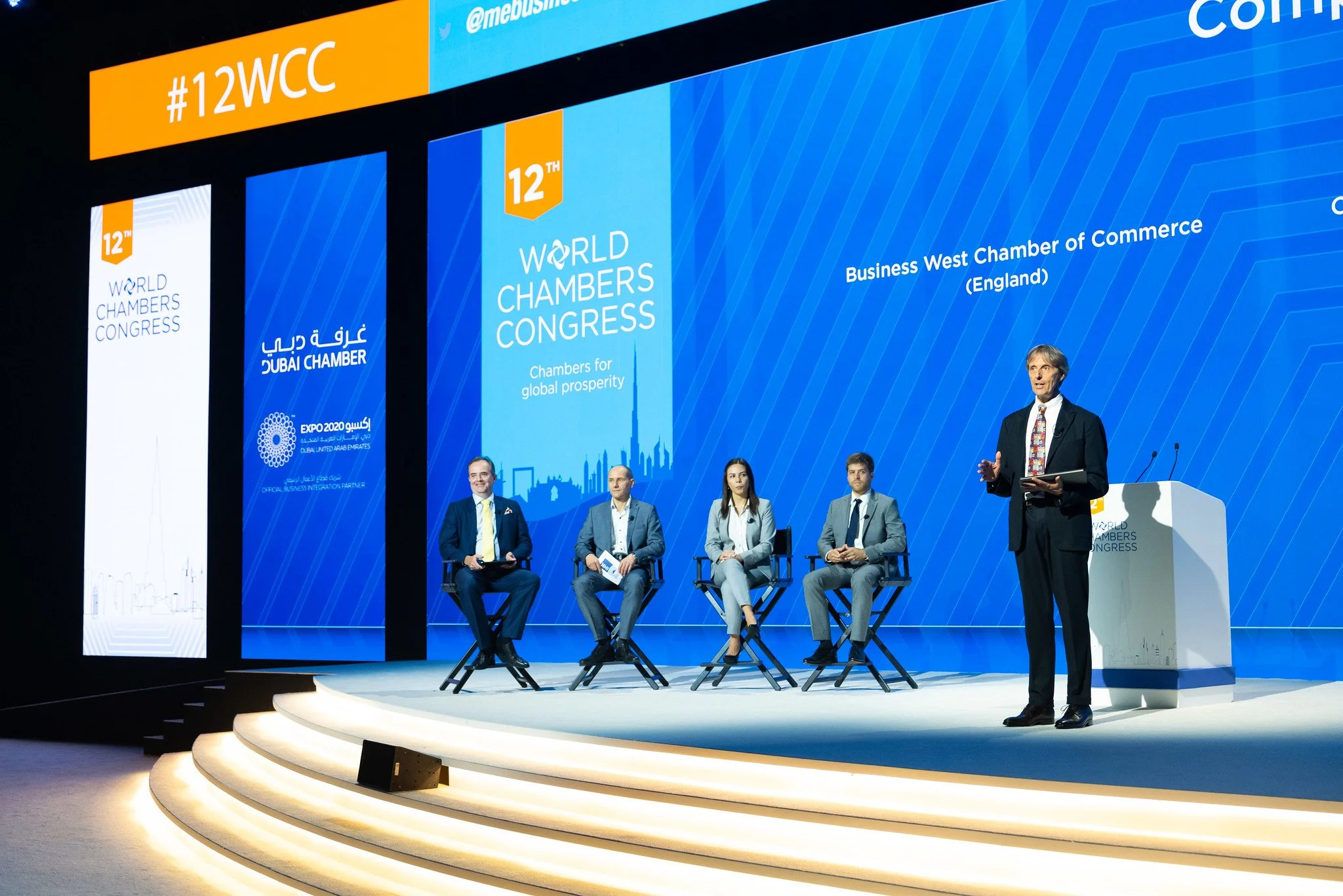
We were discussing with a Bureau Director a meeting his organisation considered important. It involved key stakeholders, and the ambition was clear: tackle relevant issues, have meaningful discussions, crack some tough nuts and leave people with the feeling that the meeting had achieved something.
Yet these meetings usually followed a familiar pattern: presentations from speakers, followed by a little time for exchanges between participants. When we proposed designing the programme around clear objectives, purpose-chosen formats and professional facilitation, the response was the sentence above.
The organisation and the Director did want a better meeting. The difficulty was imagining what that meeting could look like. The familiar programme felt safe, while a purpose-designed format felt risky.
But there is an important point to consider: there is no risk-free meeting. Whether you keep a conventional programme or redesign it, you are choosing which risks you are willing to take — and which ones you are prepared to manage.
This is why we see Meeting Design as a form of risk management applied to human communication in groups. A professional Meeting Designer will never promise that nothing can go wrong. Instead, the aim is to identify potential risks in the participant experience and design the programme to manage them deliberately.
So what happens when you change the meeting — and what happens when you don’t?
Two options. Two very different risk profiles.
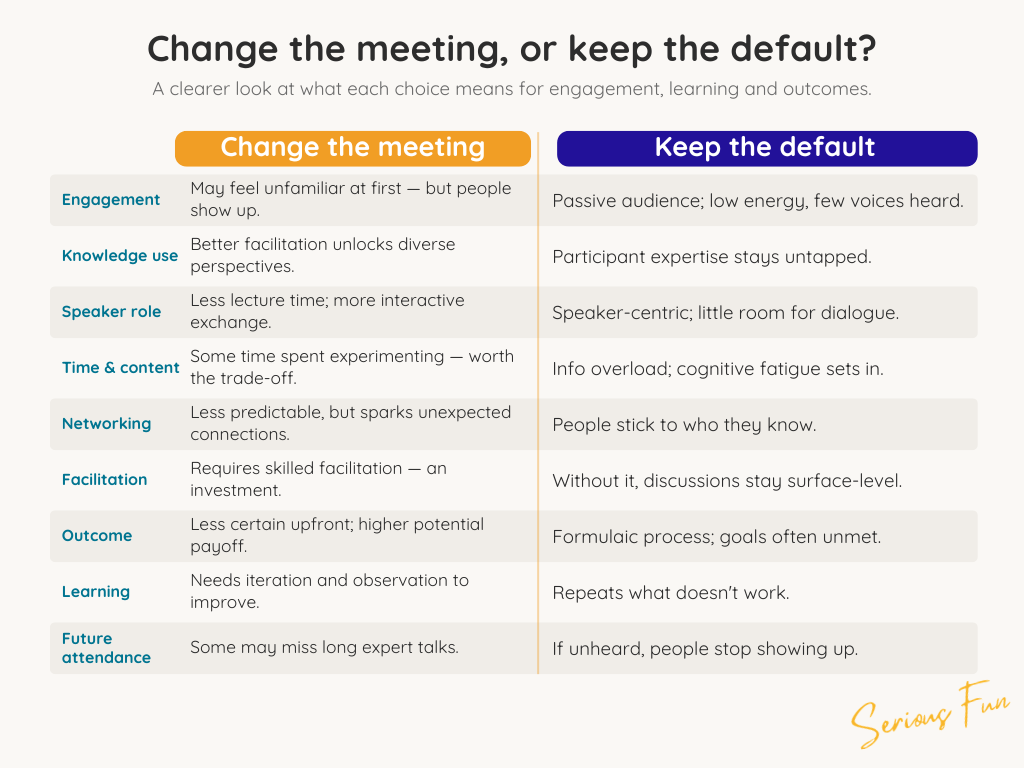
The biggest risk may be the one nobody measures
In our view, the biggest risk of a traditional “default” meeting is that it can look successful on the surface while creating little real value. The right people are in the room. The speaker line-up is impressive. The AV works. The catering is excellent. People leave saying, “That was interesting.” And yet there may be no clear outcome.
Attendance is not engagement.
Interesting discussions are not impact.
When organisers assess a new meeting format, they often focus on the immediately visible risks of changing: unfamiliarity, resistance, uncertainty or the possibility that an activity may not work as planned.
What is much harder to see is the risk of staying where you are. A familiar format may already be underperforming — but because it is familiar, its weaknesses are invisible.
The real question, then, is not “Can we afford to take the risk of changing the meeting?” It is: “Which risk are we choosing — and how deliberately are we managing it?”
Doing nothing is a choice. You just don’t see its cost.
「嗯,這些想法都不錯,但我不能冒這個風險。」
有次,我們和一位局長討論一場他的組織非常重視的會議。會議聚集了重要利害關係人,而目標也很清楚:處理重要議題,促進有意義的討論,解決棘手的挑戰,並讓與會者離開時感受到這場會議確實創造了成果。
然而,這類會議過去通常採用熟悉的流程:講者進行簡報,再留一些時間讓與會者交流。當我們提出,可以從明確的會議目標出發,選擇適合目的的互動形式,再搭配專業引導,重新設計整體流程時,我們常常會聽到開頭那句話。
整個組織和局長都想要辦一場更好的會議,但困難的地方是:他們很難想像那場會議會長什麼樣子。熟悉的流程看起來比較安全,而經過設計的形式,反而讓人感覺像是在冒險。
但有一件事值得先想清楚:會議從來沒有零風險的選項。無論維持傳統流程,或是重新設計,其實都在做選擇:你願意承擔哪些風險,以及你可以管理哪些風險。
這也是為什麼我們認為,Meeting Design 可以被視為一種應用於群體溝通的人本風險管理。專業的 Meeting Designer 不會承諾「什麼都不會出錯」,而是會先辨識與會者體驗中可能出現的風險,再透過設計,有意識地管理這些風險。
那麼,改變會議與維持原狀,分別會帶來什麼風險?
兩種選項,兩種截然不同的風險
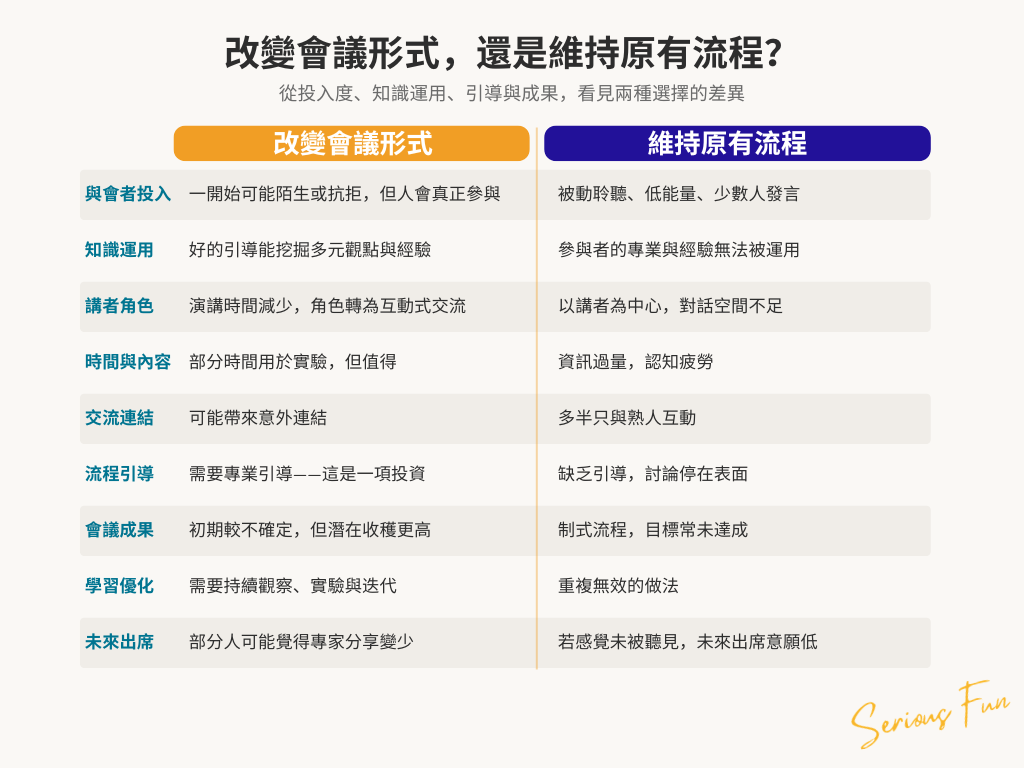
真正最大的風險,可能是沒有人衡量的那一個
在我們看來,傳統「制式流程」最大的風險,是它很容易在表面上看起來很成功,卻沒有創造真正的價值。
重要的人都到了,講者陣容很強,視聽設備一流,餐飲也無可挑剔。大家離開時說:「辦的不錯。」
但最後,卻可能沒有任何清楚、可被看見的成果。
出席,不等於投入
有趣的討論,不等於影響力
主辦者評估一種新的會議形式時,往往先看到的是改變帶來的眼前風險:陌生、抗拒、不確定,或某個互動環節可能沒有預期順利。
然而,維持原狀的風險卻很難被看見。熟悉的流程可能早已表現不佳,只因為大家習慣了,反而不容易察覺問題。
所以真正值得問的問題,不是:「我們能不能承擔改變會議的風險?」
而是:「我們正在選擇哪一種風險?又是否有意識地管理它?」
停在原地也是一種選擇—你只是沒看到代價。